
Is Mercari safe? What buyers and sellers should know



Mercari is a legitimate online marketplace used for buying and selling goods. However, like many peer-to-peer (P2P) marketplaces, it can be targeted by scammers who attempt to exploit users through fraudulent listings, phishing messages, off-platform payment requests, and other schemes.
What is Mercari?
Mercari is an online marketplace where users buy and sell new or used items through the app or website. Rather than stocking products itself, Mercari provides the platform for listings, payments, shipping, and order tracking.
Buyers can browse listings, submit offers, and complete purchases directly on Mercari, while sellers can manage their listings and communicate with buyers on the platform.
Listings range from clothing and electronics to collectibles and home goods, sometimes at lower prices than traditional retail stores because items may come from individual sellers.
How Mercari transactions work
Mercari manages payments, order tracking, and payout timing inside the platform rather than allowing buyers and sellers to exchange funds directly. In most cases, the process works as follows: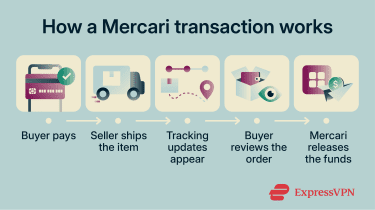
- Payment processing: The buyer pays through Mercari at checkout, and the payment is held by Mercari until the transaction is complete.
- Shipping methods: The seller ships the order using either a prepaid shipping label provided through Mercari or a shipping method they arrange themselves.
- Shipping and tracking: Sellers are generally expected to ship orders within 3 business days. Mercari prepaid labels include tracking automatically, while sellers using self-managed shipping must arrange their own tracking.
- Tracking updates: Tracking information appears in the order details section of the app or website after the shipping carrier scans the package.
- Review and completion: The buyer inspects the item and can contact the seller on Mercari within the review window if there's an issue. If nothing is reported, Mercari automatically completes the transaction.
- Seller payouts: After completion, sellers can transfer funds from their Mercari balance to a linked payment method.
Is Mercari legit and safe?
Mercari is a legitimate, registered company that's used by millions of buyers and sellers. The platform provides structured systems for transactions, communication, and dispute reporting, which add more oversight than informal buying and selling arrangements.
However, like other P2P marketplaces, Mercari isn't completely risk-free.
Buyers and sellers still rely on accurate listings, reliable shipping, and user reporting when problems arise. Understanding Mercari's protections and limitations can help users make safer buying and selling decisions.
How Mercari protects buyers and sellers
Mercari includes several built-in protections designed to reduce fraud, secure transactions, and help resolve disputes. Some of the platform's main protections include:
Secure payment handling
Mercari helps protect payments and account activity by keeping transactions inside its app and website and monitoring accounts for suspicious behavior. It also uses encrypted payment processing to help protect sensitive financial information such as card and bank details.
To help reduce fraud, Mercari may temporarily limit accounts or request additional verification if unusual activity is detected. In some situations, seller payouts may remain in the Mercari balance until identity verification, account review, or other required checks are completed.
Users can also enable two-factor authentication (2FA) to add another layer of account security.
Returns and dispute handling
If a buyer reports a problem before the payment is released to the seller, Mercari can review the case before releasing the payment.
Buyers can request a return or refund for issues such as:
- The item is significantly different from the listing.
- The wrong item was sent.
- The item arrived damaged.
- The item is counterfeit.
If Mercari approves the request, it usually provides a prepaid return label and sets a deadline for returning the item. Buyers who miss the return window may lose eligibility for a refund.
Ratings and seller reviews
Mercari displays ratings and written reviews on seller profiles. This gives buyers a visible history of how sellers have handled past orders and how other users rated the experience.
Mercari also offers Verified badges for accounts that complete additional checks, such as email, phone, and government ID verification.
While this can help confirm that an account has completed these checks, verification doesn't guarantee legitimacy, so buyers should still carefully evaluate listings and sellers' histories.
Item authentication for eligible listings
Some luxury and designer listings on Mercari may include a Mercari Authenticate badge. This feature uses third-party photo review for certain brands and categories to help identify potential counterfeit items.
Authentication is based on submitted images rather than a physical inspection of the product.
Shipping Protection eligibility
Mercari prepaid shipping labels include tracking and may qualify for Shipping Protection if a package is lost or damaged during transit. Coverage is generally available for up to $200 on eligible shipments and lower limits for certain envelope-based shipping methods.
Sellers typically need to meet the following requirements to qualify for Shipping Protection:
- Use a Mercari prepaid label.
- Select the correct package weight and dimensions.
- Ship the order within the required timeframe.
- Ensure the order was packed safely in accordance with Mercari and the carrier's guidelines.
In-app support and dispute resolution
Mercari allows buyers and sellers to report problems directly through the app or website rather than handling disputes entirely on their own.
Support is available through the Help Center and Contact Us page, including in-app messaging, email support, and limited phone support for certain issues.
When reviewing disputes, Mercari may examine order details, tracking records, in-app messages, and photos of the item and packaging. Buyers and sellers may also need to provide additional evidence within the requested timeframe during the review process.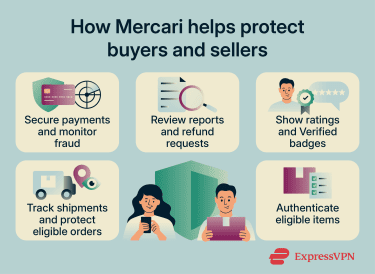
How buyer and seller protections differ
Mercari's transaction process gives buyers time to inspect an item before the seller receives payment. This allows buyers to report problems if an order arrives damaged, incorrect, or significantly different from the listing.
Sellers assume more risk earlier in the transaction because they must ship the item before funds are released. If a dispute occurs, both sides may need to rely on photos, tracking records, and in-app messages to support their claim.
Mercari's protection limitations
Even with built-in protections, some issues still depend on user reporting, tracking records, and the evidence available after a sale. Common limitations include:
- Listings and photos: Buyers must judge items based on seller-provided photos and descriptions, which may not fully reflect the item's condition or authenticity.
- Review deadlines: Buyers may have limited time to inspect an item, gather evidence, and report issues before the transaction is finalized.
- Transaction verification: Mercari can review tracking records, photos, and messages, but dispute decisions still depend on the evidence provided by buyers, sellers, and shipping carriers.
Common scams on Mercari
Like other P2P marketplaces, scammers sometimes use Mercari to target buyers and sellers with fake listings, counterfeit items, phishing messages, and fraudulent payment requests.
Understanding how these scams work can make suspicious activity easier to recognize. Some scams target buyers more often, while others exploit sellers during payments, delivery disputes, or returns.
Below are some of the most common tactics users may encounter:
Fake listings and counterfeit items
Some scammers create listings for items they don't actually own or use misleading photos and descriptions to hide damage, missing parts, or authenticity issues. In other cases, the item itself may be counterfeit, especially for unauthenticated luxury brands, electronics, or collectibles.
Bait-and-switch listings
In bait-and-switch scams, the listing usually shows a real item but leaves out important details about its condition, specifications, or included accessories. Photos may highlight the item's best angles, while descriptions omit damage, missing parts, or exact product details.
After delivery, the buyer receives an item that only partially matches what the listing advertised. The item may technically match the listing title while still differing from what the buyer expected based on the photos and description.
Off-platform payment and refund scams
Some scammers try to move part or all of a transaction outside Mercari to avoid the platform's payment and dispute systems. This may involve requests such as:
- Asking for a partial refund through another payment app.
- Claiming a payment failed and requesting a second transfer.
- Offering discounts for completing the transaction outside of Mercari.
- Asking to split payments or refunds outside of Mercari.
Phishing and fake support messages
Scammers sometimes impersonate Mercari and send messages that look like official accounts or support notifications. They may claim there's a problem with the account, a payment issue, or a required verification step to create urgency and pressure users to respond quickly.
These messages may ask for login credentials or payment details, include links to fake websites, or direct users to payment pages outside Mercari.
Users should be cautious with unsolicited messages and verify that emails or notifications come from official Mercari channels before clicking links or sharing information.
Read more: How to detect phishing and prevent scams online
Empty box or missing item scams
In these scams, tracking may show that a package was delivered even though the box is empty, incomplete, or contains the wrong item. This can make disputes difficult because delivery records don't confirm what was actually inside the package.
Some versions of this scam also target sellers during returns. A buyer may send back an empty box, a damaged item, or a completely different product.
In some cases, scammers may also use misleading tracking information to make a shipment appear legitimate when the package was sent to the wrong address or didn't contain the expected item.
In these situations, resolving the dispute often depends on the condition of the packaging, return details, and any photos or records collected during the transaction.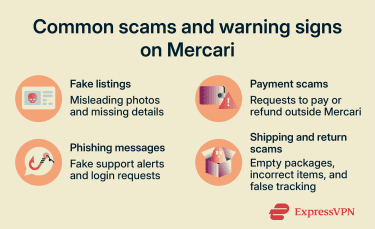
How to avoid scams on Mercari
While no marketplace is completely risk-free, a few precautions can help buyers and sellers spot suspicious activity earlier and reduce the risk of scams.
- Seller history: Review ratings, feedback, and account activity to see how the seller handled previous transactions.
- Listing details: Compare photos, descriptions, pricing, and item details for inconsistencies, missing information, or unusually vague wording.
- In-app transactions: Use Mercari's messaging and checkout systems rather than moving conversations, payments, or refunds to another app or website.
- Item inspection: Open the package, test the item when possible, and confirm it matches the listing before submitting a rating or allowing the transaction to finalize automatically.
- Luxury items: Check whether eligible listings include Mercari Authenticate and ask questions if important details or proof of authenticity are missing.
- Shipping records: Use tracked shipping, keep shipping receipts, and verify that package weight and shipping details are accurate. Tracking records can be important if a delivery dispute occurs.
- Order documentation: For higher-value items, keep photos of the item's condition, packaging, and shipping label before sending the package. Documentation may help if questions arise about damage, missing items, or return disputes.
Read more: Practical online safety tips
What to do if you're scammed on Mercari
If you suspect a scam or problem with an order, it's important to act before the transaction completes automatically. Taking action early gives Mercari more opportunity to review the issue.
Common response steps include:
- Request a refund early: Avoid submitting a rating or allowing the review window to expire before reporting the issue.
- Reporting the problem: Submit the request directly through the order details page so Mercari can review the transaction.
- Selecting the correct issue: Choose the category that best matches the problem, such as a damaged item, incorrect listing, or delivery issue.
- Preserving seller records: Keep tracking information, shipping receipts, listing photos, and records of the item's condition in case Mercari requests additional information during a dispute review.
- Saving evidence: Keep photos of the item, packaging, shipping label, and any visible damage or inconsistencies.
- Following return instructions: Use the provided return label and follow Mercari's return timeframe if a return request is approved.
- Securing the account: Reset passwords, review payment methods, and enable 2FA if you believe account access or payment information may have been compromised.
- Contacting the bank: If unauthorized charges appear or funds were sent outside Mercari, the bank or payment provider may be able to review the transaction and discuss possible next steps.
FAQ
Does Mercari refund buyers who get scammed?
How can you tell if a Mercari seller is trustworthy?
Is it safe to buy expensive items from Mercari?
Can sellers be affected by scams on Mercari?
How long do you have to report a problem on Mercari?
Should you ever pay outside the Mercari app?